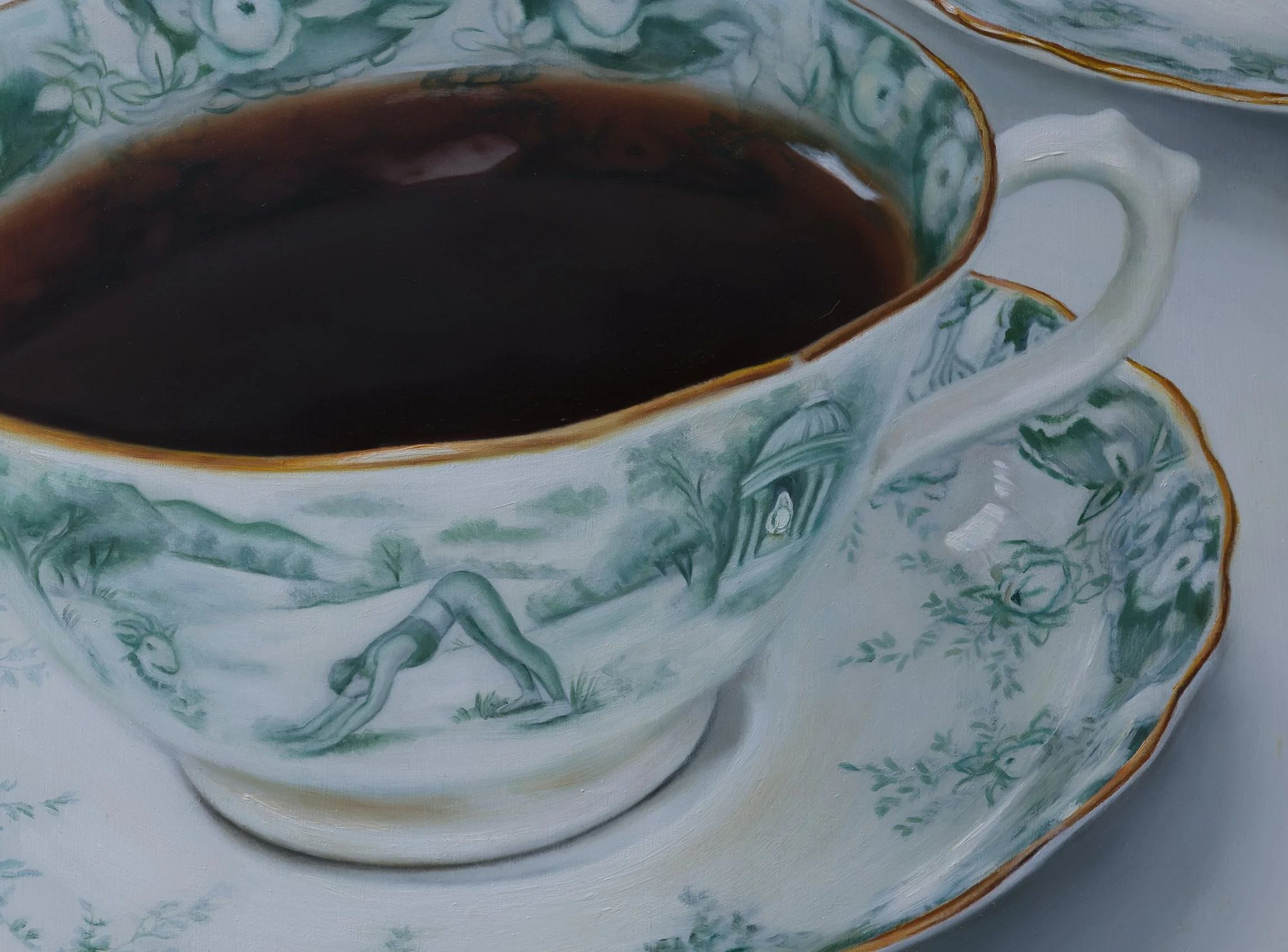
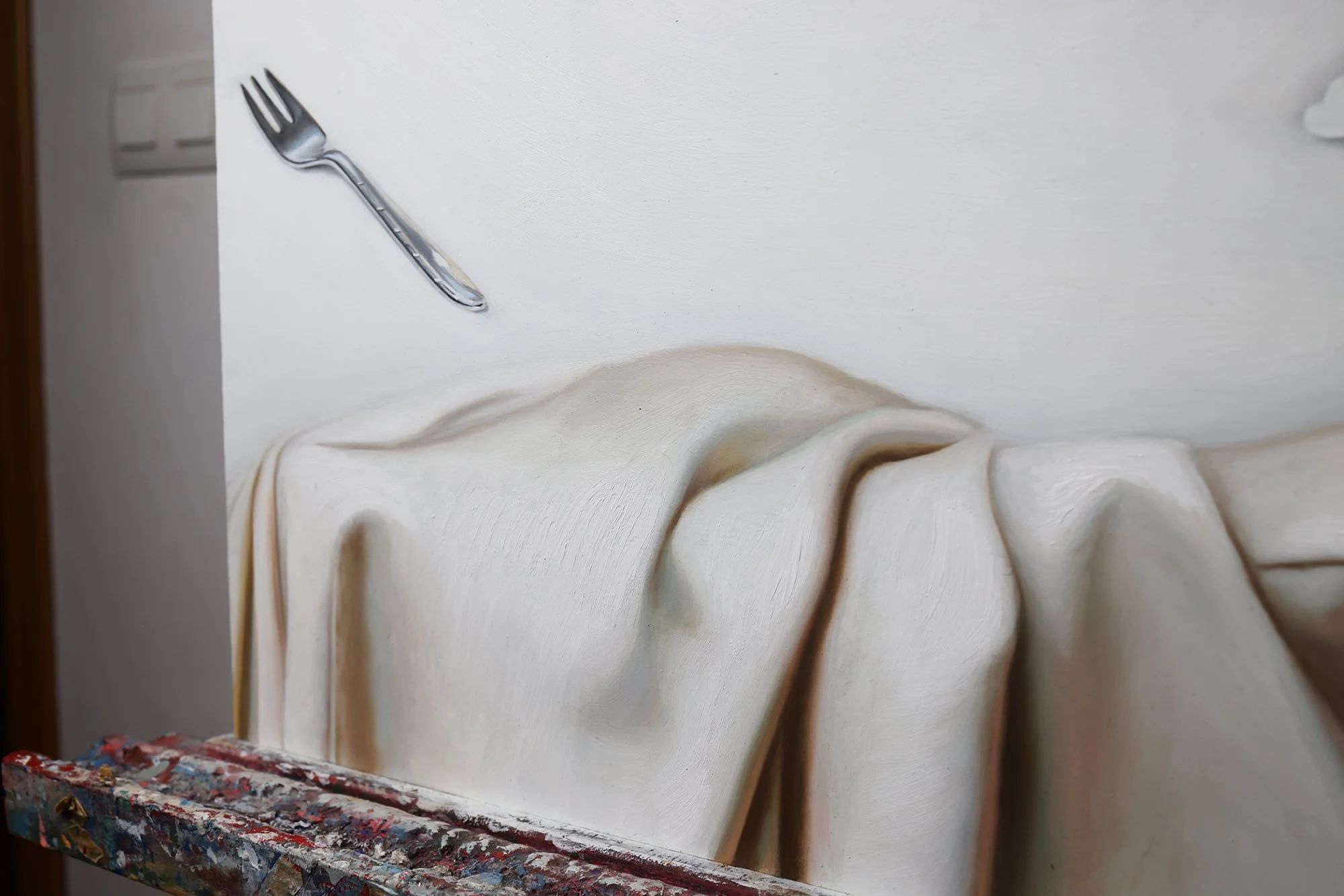
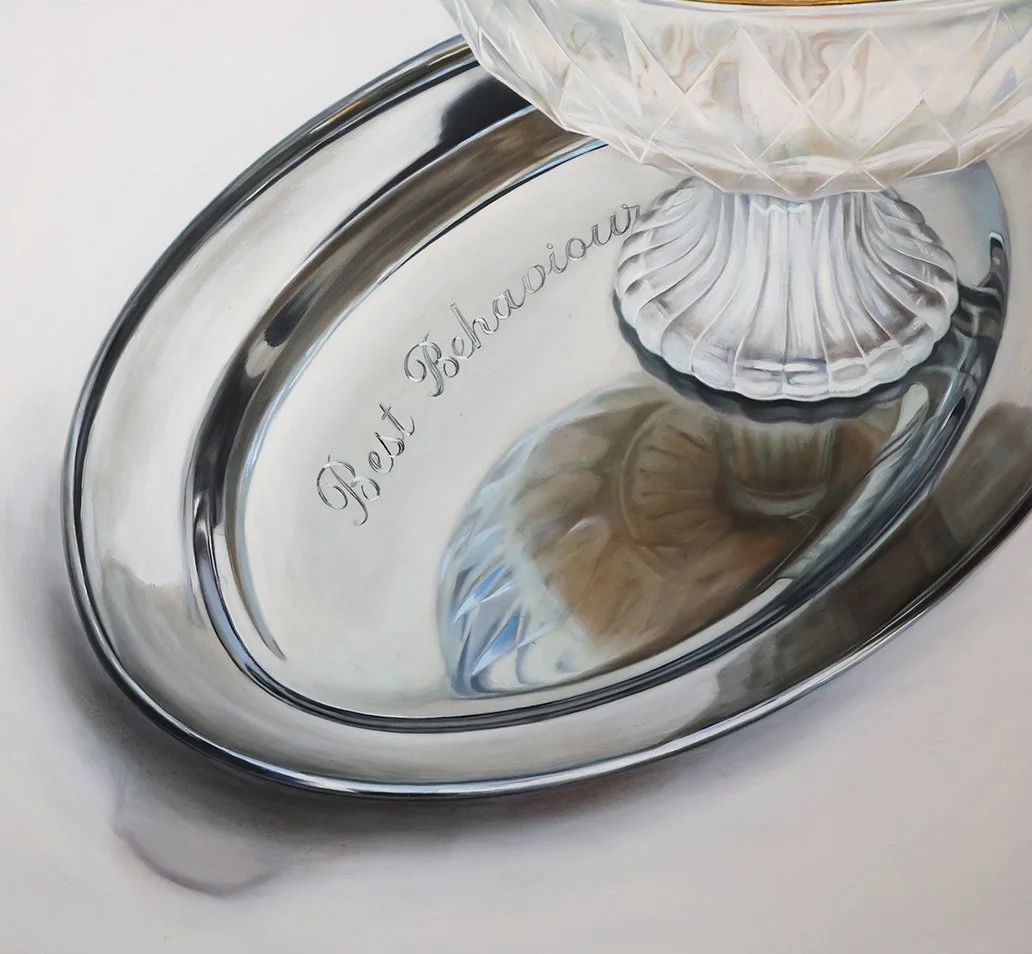
You Shouldn’t Have
Good manners are generally considered a reliable indication of good intentions. This is convenient, since the two have remarkably little obligation to coincide.
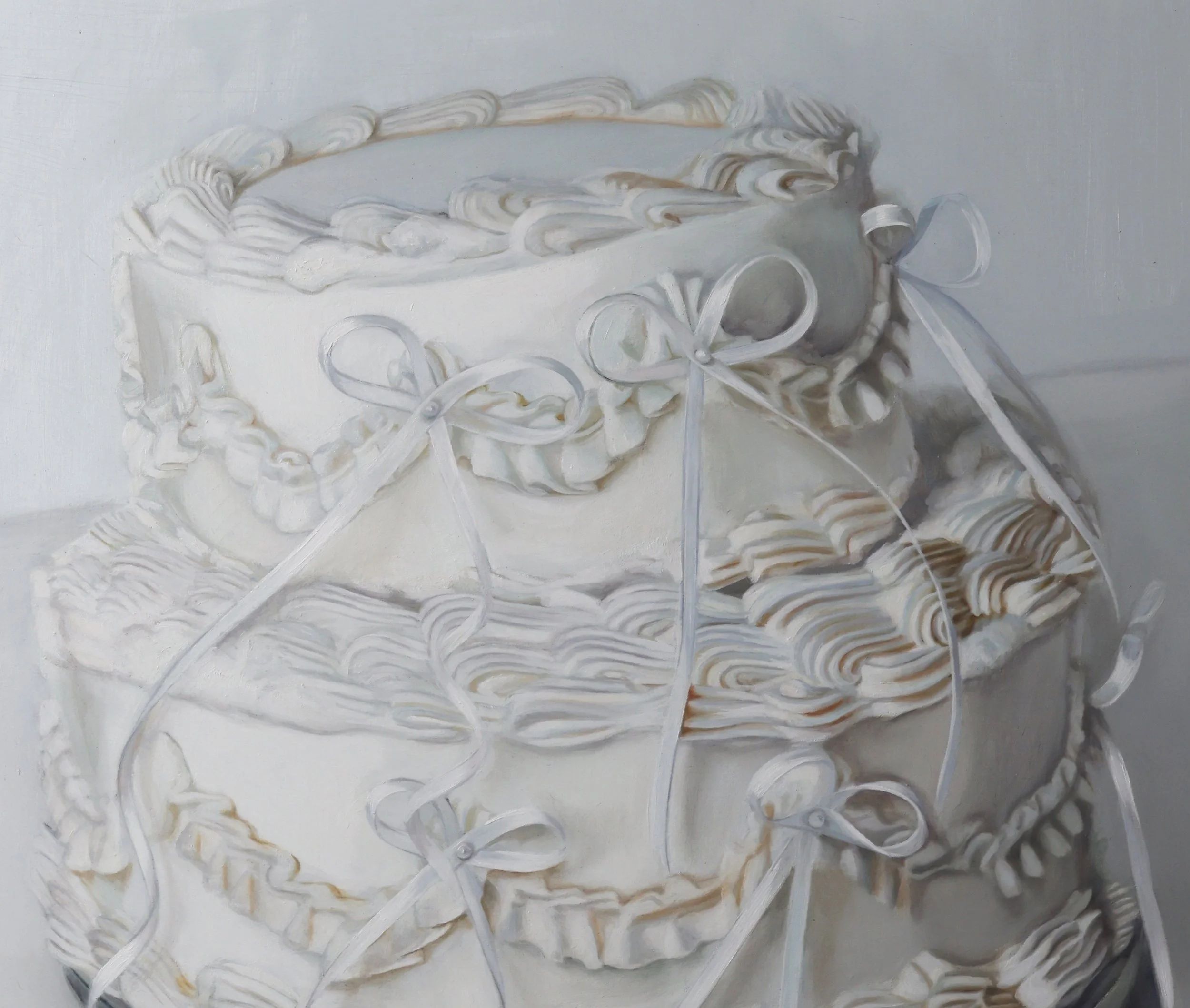
With Compliments — detail
A series of six oil paintings
In You Shouldn't Have, familiar rituals of hospitality, generosity and celebration provide the setting for a series of increasingly questionable arrangements. Nice objects occupy composed scenes in which something appears to have gone wrong, although identifying precisely what, and whether anyone is responsible, proves rather less straightforward.
The paintings draw on our tendency to make sense of incomplete information, particularly when appearances encourage us to reach a favourable conclusion. Small discrepancies accumulate, familiar objects acquire conflicting meanings, and details that initially seem incidental may become rather difficult to dismiss. The longer one looks, the less certain the original explanation becomes.
There is a peculiar comfort in believing that appearances can be trusted. Fortunately, most people are polite enough not to investigate.